


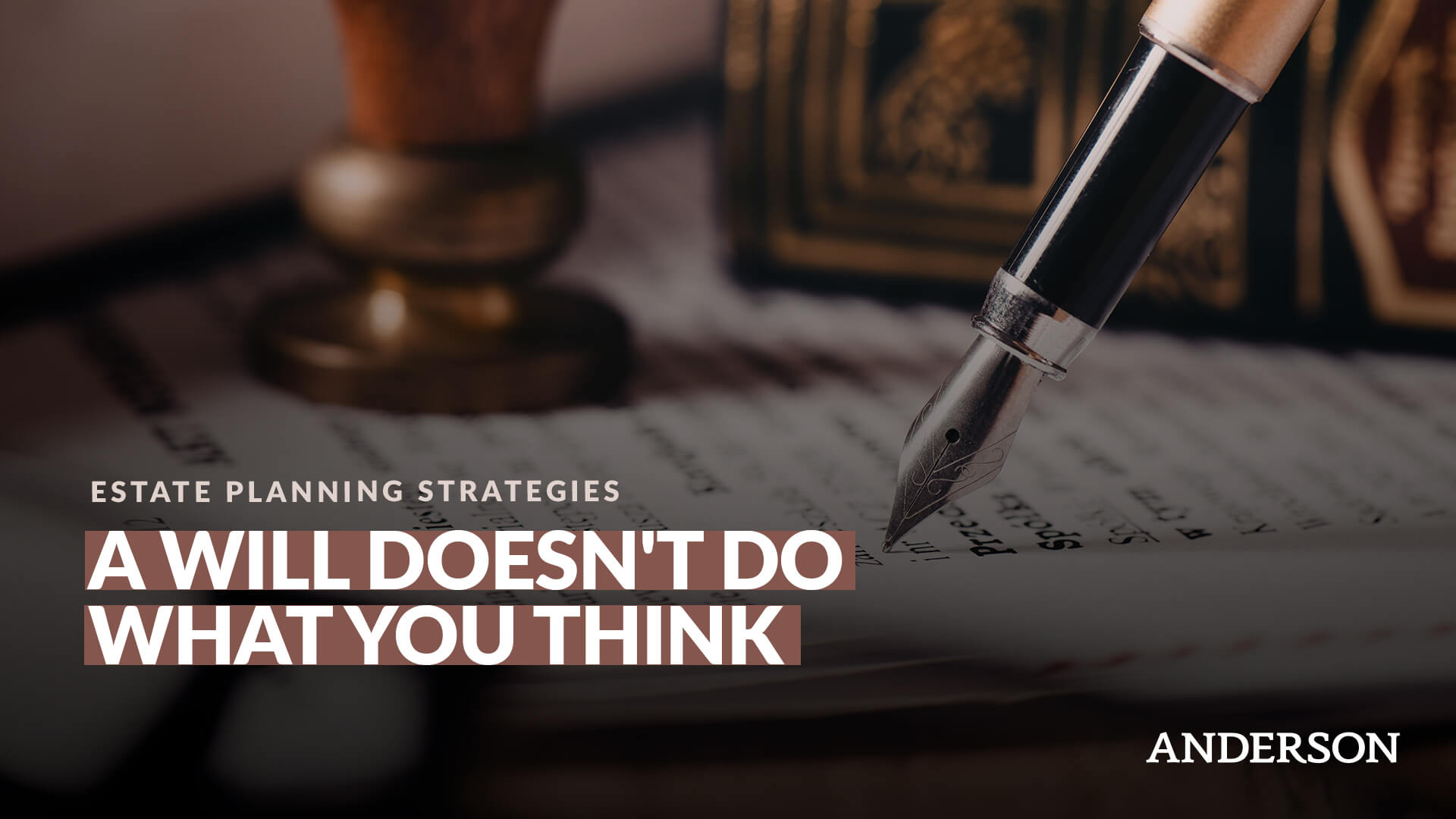
Most people assume that once they sign a Will, their estate planning process is complete. They have the legal documents in place, named beneficiaries, and feel confident that their family members are taken care of.
But is it really necessary to have a Will? Isn’t a Will useless if I end up in probate anyway?
When it comes to estate planning for business owners and investors, the gaps between what a Will can and can’t do put everything they have built at risk.
Because a Will does not control your bank accounts, your retirement accounts, or your beneficiary designations the way most people think it does. And it does not keep your estate out of probate court.
That is why understanding the difference between a Will and a revocable living trust matters so much—especially if your goal is to protect assets, reduce estate taxes, and create a plan that actually works when your family needs it.
If you want to learn more about estate planning for investors and business owners, watch the video here.
Does a Will Avoid Probate, or Does It Trigger It?
A Will does not avoid probate court.
In most cases, it initiates the probate process.
That’s because a Will is not a transfer mechanism—it’s a set of instructions submitted to the court.
Once filed, the probate court oversees how you distribute your assets, validates the document, and authorizes your executor to act.
That means your estate is subject to:
- Court supervision
- Legal timelines
- Administrative procedures
For investors, this creates delays in managing real estate, business interests, and income-producing assets—exactly when continuity matters most.
Why Does Probate Create Risk for Investors and Families?
Probate isn’t just inefficient—it creates exposure.
Once your Will enters probate, it becomes part of the public record.
That means:
- Your estate planning documents are accessible
- Your family members are identified
- Your assets—especially real estate—can be located
This visibility can attract bad actors.
There are documented cases of scammers targeting estates through probate filings, sending fraudulent invoices, or attempting to commit title fraud on vacant properties.
For real estate investors, this creates operational risk:
- Vacant properties become targets
- Ownership structures are exposed
- Timing vulnerabilities increase
A public process introduces unnecessary risk into what should be a controlled transition.
Request a free consultation with an Anderson Advisor
At Anderson Business Advisors, we’ve helped thousands of real estate investors avoid costly mistakes and navigate the complexities of asset protection, estate planning, and tax planning. In a free 45-minute consultation, our experts will provide personalized guidance to help you protect your assets, minimize risks, and maximize your financial benefits. ($750 Value)
Is a Will Useless If It Doesn’t Protect You While Alive?
A Will has no authority while you are alive.
That creates one of the biggest failures in most estate planning strategies.
If you become incapacitated:
- No one can manage your financial accounts
- No one can make decisions for your business
- No one can access or restructure your assets
Without proper planning, your family may need to go through court to gain authority—often through guardianship or conservatorship.
This adds:
- Legal complexity
- Additional costs
- Emotional stress for your family members
This is where a coordinated plan with an estate planning attorney and a financial advisor becomes essential.
Can a Will Keep Your Estate Private & Prevent Conflict?
No, and in many cases, it increases the likelihood of conflict.
Because probate is public, your Will and related estate planning documents become accessible.
This transparency can lead to:
- Disputes between family members
- Challenges to your wishes
- Delays in asset distribution
Wills can be contested, and when they are, the process can take months or even years.
During that time:
- Assets may be frozen
- Income-producing properties may stall
- Legal costs increase
The longer probate drags on, the more value leaks out of your estate.
Why Can Probate Become So Expensive for Property Owners?
Courts calculate probate costs based on gross estate value, not net equity, which is why many people misunderstand them.
That means:
- A property with a large mortgage is still valued at full market price
- Fees scale with total asset value—not what you actually own
In one example:
- Estate value: ~$1.1 million
- Attorney fees: ~$24,000
- Executor fees: ~$24,000
- Total: ~$48,000
And those are standard fees—additional costs can apply for:
- Litigation
- Real estate transactions
- Tax work
This directly impacts your ability to preserve wealth and reduce estate taxes, especially when layered with potential federal estate tax exposure in larger estates.

What Does a Will Actually Do Well in an Estate Plan?
A Will still plays an important role.
It allows you to:
- Name guardians for minor children
- Appoint an executor
- Provide instructions to distribute your assets
- Coordinate with other estate planning documents
But it is only one piece of the estate planning process.
It does not:
- Avoid probate court
- Control all asset types
- Provide privacy
- Handle incapacity
That’s why relying on a Will alone creates gaps.
How Does a Revocable Living Trust Improve Estate Planning for Investors?
A revocable living trust changes how your estate functions—both during your life and after.
It is one of the most effective types of trusts for investors and business owners because it addresses the limitations of a Will and creates continuity where most plans fall apart.
Here’s how:
Avoids Probate Court
Assets titled in the trust bypass probate entirely.
Maintains Privacy
Trust administration stays private—unlike probate filings.
Provides Continuity
A successor trustee can step in immediately if you become incapacitated.
Coordinates Assets and Ownership
A properly structured trust works alongside:
- Beneficiary designations
- Retirement accounts
- Bank accounts
- Business entities
For business owners, this is where planning often breaks down.
If your estate plan does not align with your company structure, you risk creating confusion, disputes, or even forced sales during ownership transitions. That is why you should coordinate your trust with your operating agreements and buy-sell agreements—so there is a clear roadmap for how ownership transfers, who has control, and how interests are valued and exchanged.
Enhances Control and Protection
You can dictate how and when assets are distributed, while also protecting them from unnecessary risk, including divorce, lawsuits, or mismanagement by future beneficiaries.
Supports Long-Term Strategy
While a revocable trust does not eliminate income tax, it can be part of a broader strategy to reduce estate taxes and maintain long-term control over how wealth is preserved and transferred.
Is It Necessary to Have a Will If You Have a Trust?
Yes, but it serves a different role.
A Will often acts as a backup document and ensures you properly direct any assets not placed into the trust.
This layered approach includes:
- A revocable living trust
- Supporting estate planning documents
- A Will as a safety net
Together, they create a complete estate planning structure.
What Should Investors & Business Owners Do Next?
Start by reframing the issue.
Estate planning is not just about signing documents. It is about building a plan that protects what you have worked to create and makes life easier for the people who may one day have to step in. For investors and business owners, that means thinking beyond a will. You can use this as an investor’s guide to estate planning and focus on outcomes, not assumptions.
Start by reassessing your current plan and asking better questions:
- Do I want privacy or public exposure?
- Do I want speed or court delays?
- Do I want control or default legal processes?
- Do I want my family to have clarity or confusion?
- Do I want my assets to transfer smoothly or get stuck in probate?
- Do my legal documents actually avoid probate court?
- Can my family manage assets if I become incapacitated?
- Are my bank accounts and retirement accounts properly structured?
- Am I working with an experienced estate planning attorney?
Use those answers to shape your estate plan.
That is how investors and business owners make smarter decisions about Wills, trusts, incapacity planning, and long-term control. The biggest mistake is not signing a Will. It is believing a Will is enough.
Schedule a free 45-minute strategy session with an Anderson advisor.
We’ll review your assets, identify gaps, and help you build a comprehensive estate plan tailored to investors and business owners—one designed to protect assets, reduce estate taxes, and create long-term control.
Unlock the Secrets of Top Real Estate Investors — Save Your Free Spot Today!
Join our FREE Virtual Tax & Asset Protection Workshop to discover how to slash your taxes, shield your assets, and secure your financial future.
Live Q&A with Experts | Real Strategies You Can Use Immediately