



One tenant injury. One slip-and-fall lawsuit. One verdict that exceeds your insurance limits.
That’s all it takes to jeopardize an entire real estate portfolio—sometimes permanently.
Most property owners assume they’re protected because they have insurance or because their properties are held in a Limited Liability Company (LLC). But under United States law, that assumption can be dangerously incomplete. When a premises liability claim blows past your coverage, the real question is whether the legal structure for real estate business contains the damage, or leaves everything you own exposed.
Before we go further, I recommend watching the full video where I walk through asset protection for real estate investors and show exactly how these structures work in practice.
Now let’s talk about why this risk exists—and how savvy investors eliminate it.
What Does It Really Mean When We Say One Tenant Injury Can Wipe Out a Portfolio?
It means a single lawsuit can reach far beyond the property involved and put everything you own at risk.
If multiple investment properties sit inside one legal entity—or worse, your personal name—courts don’t see five properties. They see one pool of assets. Once a judgment exceeds insurance coverage, plaintiff attorneys will pursue:
- Other investment properties
- Non-exempt bank accounts
- Business interests
- In some cases, your primary residence or IRA retirement accounts (depending on state law and homestead exemption limits)
This is where asset protection for landlords stops being theoretical and becomes essential for financial security and peace of mind.
Request a free consultation with an Anderson Advisor
At Anderson Business Advisors, we’ve helped thousands of real estate investors avoid costly mistakes and navigate the complexities of asset protection, estate planning, and tax planning. In a free 45-minute consultation, our experts will provide personalized guidance to help you protect your assets, minimize risks, and maximize your financial benefits. ($750 Value)
What Is Premises Liability?
Premises liability is the legal doctrine that holds landlords responsible for injuries occurring on their properties when reasonable care is not exercised.
Courts evaluate four elements:
- Duty of care owed to tenants or visitors
- Breach of that duty under state law
- Causation linking the breach to the injury
- Damages, often substantial in serious injury cases
When all four elements are met, the law holds you personally liable. Insurance is used first, but insurance is not the final line of protection.
Why Insurance Isn’t Enough for Real Estate Investors?
Insurance companies exist to limit payouts, not guarantee financial security.
Most landlord policies cap between $500,000 and $1 million. Catastrophic injuries—brain trauma, permanent disability, wrongful death—regularly result in verdicts far exceeding those limits.
Once coverage is exhausted, the insurance company is no longer involved. At that point, the lawsuit turns into an asset hunt.
This is why asset protection strategies focus on ownership structure, not just coverage amounts.
Do I Need a Separate LLC for Each Property I Own?
Separating properties into distinct legal entities is one of the most effective forms of asset protection for investors, which is why the “one property per LLC” approach is so widely used.
This asset protection strategy uses an LLC as a liability silo. A lawsuit tied to one address should not expose unrelated investment properties.
When multiple properties are placed into a single LLC, the core benefit of forming a legal entity is weakened. One tenant injury becomes one lawsuit—and suddenly several properties are exposed to the same judgment.
The question isn’t whether you can bundle properties together. It’s whether you’re willing to risk all of them.
What Happens When Multiple Investment Properties Sit in One Business Entity?
The exposure multiplies.
A single slip-and-fall claim can place:
- All properties in that LLC
- Their combined equity
- Any excess cash or reserves
at risk in one proceeding.
This is one of the most common structural mistakes I see among seasoned investors. It’s efficient on paper—but catastrophic in litigation.
How Do Series LLCs Fit Into Asset Protection Strategies for Real Estate Investors?
In states that recognize them, Series LLCs can offer similar protection with lower administrative friction.
Each “series” or “cell” operates as a separate liability compartment under one parent entity. Properly formed and maintained, a lawsuit in one series should not affect the others.
That said, Series LLCs are highly dependent on state law, lender acceptance, and operational discipline. They are not a universal solution—but in the right jurisdiction, they can be effective.
How Do Land Trusts and LLCs Work Together for Asset Protection?
Land trusts can be a powerful tool in a real estate asset protection plan—but only when you understand what they do, what they don’t do, and how state law treats them. In certain states—most notably Florida—they can provide asset protection benefits when structured correctly.
Outside of those states, you typically need to pair the land trust with an LLC. Without that buffer, a lawsuit against the trust can pass through to the trust’s beneficiary.
The key principle stays the same: liability isolation. The trust may improve privacy or simplify administration, but the LLC provides the enforceable barrier that helps keep a claim from spreading to other assets.
Why Use a Wyoming Holding LLC as Part of Asset Protection Planning?
Most investors focus on lawsuits tied to their properties, but the bigger threat is often the lawsuit that affects them personally.
Investors can be sued personally—for car accidents, contract disputes, or unrelated business claims. Without a protective structure, personal judgments can tap investment assets to fulfill the judgment against them.
A Wyoming LLC offers strong charging order protections, meaning creditors cannot force distributions or seize underlying assets. This makes it an effective buffer between personal liability and investment holdings.
Used correctly, it supports financial security while preserving operational flexibility.
Where Do Irrevocable Trusts and Asset Protection Trusts Fit In?
For higher-net-worth investors, Irrevocable Trusts, including Domestic Asset Protection Trusts (DAPTs), can play a role in long-term planning.
These structures are governed by specific state law and require careful coordination. When done properly, they can protect assets from future creditors while supporting estate planning, life insurance strategies, and intergenerational wealth transfer.
They are not substitutes for LLCs—but complements when the situation warrants.
What About My Primary Residence and the Homestead Exemption?
Many investors assume their primary residence is automatically protected.
That depends entirely on state law.
Some states offer robust homestead exemptions. Others impose strict caps. Relying on the exemption alone—without understanding its limits—can be a costly mistake.
Asset protection planning evaluates all assets, not just investment properties.
What Are the Next Steps for a Real Estate Investor?
Real estate asset protection isn’t about eliminating risk. It’s about controlling where that risk can travel when something goes wrong.
If you want to know how to protect assets from lawsuits, the answer is not a single tool. It’s a coordinated structure built around enforceable legal entities, insurance, and state-specific protections.
For most investors, that means:
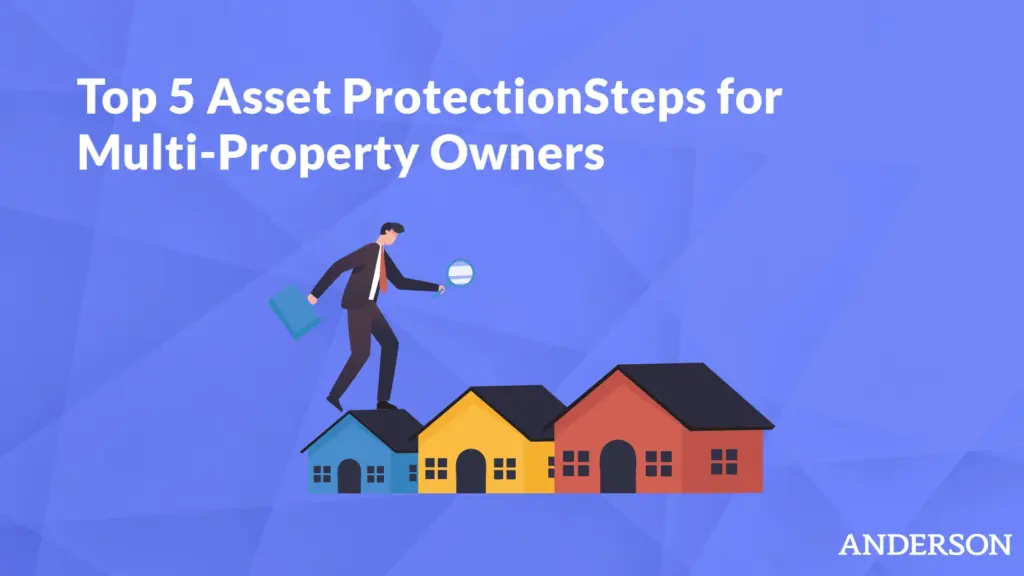
- Using separate LLCs or properly structured Series LLCs to isolate each investment property
- Coordinating insurance coverage with entity ownership, not relying on insurance alone
- Holding assets through legal entities designed to limit collection exposure under state law
- Avoiding commingling, undercapitalization, and sloppy operations that invite veil-piercing
- Implementing additional layers—such as holding companies, trusts, or other asset protection strategies—when portfolio size and risk justify it
When done correctly, real estate asset protection ensures that one tenant injury remains one contained legal event, not a portfolio-wide liquidation.
That’s the difference between hoping your structure holds up—and knowing it was built to be tested.
If you want help applying these strategies to your own investment properties, schedule a free 45-minute Strategy Session with a Senior Advisor. We’ll evaluate your current legal structure, identify exposure points, and show you how professional real estate investors protect assets from lawsuits before a claim ever arises.
Because real estate asset protection isn’t optional in today’s legal environment—it’s part of doing business.